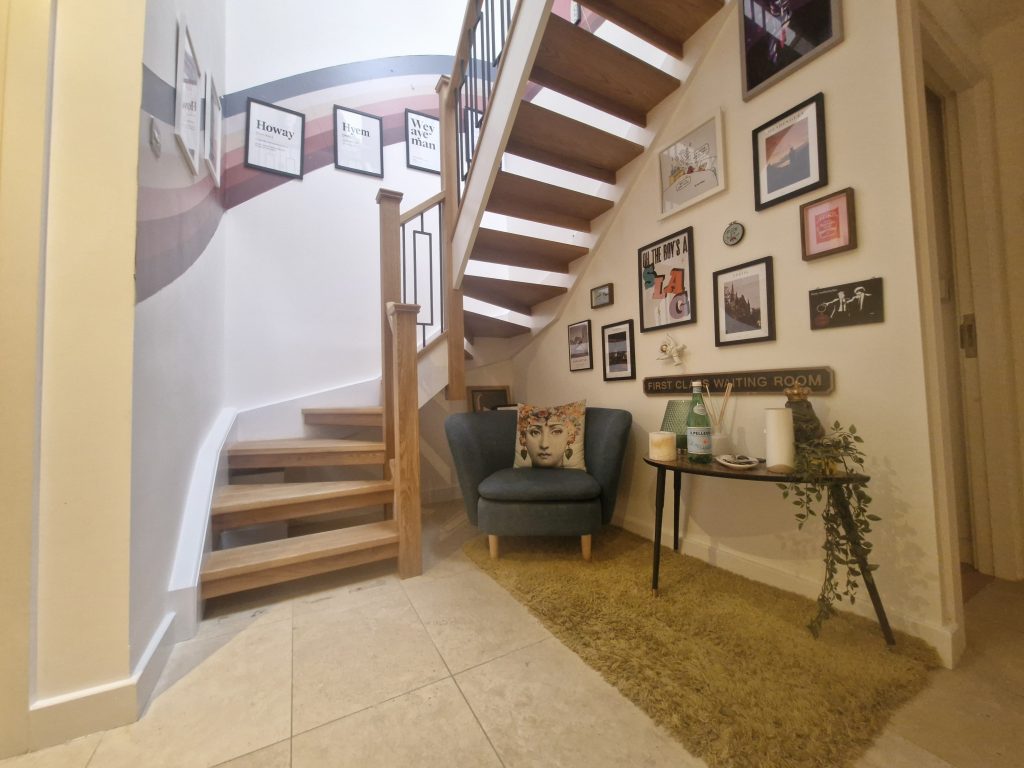
A staircase is often one of the first features you see when entering a home, but replacing the entire staircase isn’t always necessary to achieve a completely different look.
If the existing staircase is structurally sound, upgrading the handrails, newel posts and spindles can transform it while retaining the existing strings, treads and risers.
One of the most popular combinations is solid oak handrails and newel posts, paired with either traditional timber spindles or contemporary metal balusters. The result is a staircase that can work equally well in a traditional property or a modern interior.
Why choose oak?
Oak has remained popular in staircase construction for good reason. It’s durable, hard-wearing and has a natural grain that works particularly well for components that are handled and seen every day.
Unlike painted softwood or MDF components, oak can become a feature in its own right.
A typical refurbishment might combine:
- Solid oak handrails
- Oak newel posts or replacement newel sections
- Oak baserails
- Timber or metal spindles
- Existing painted strings
- Existing treads and risers
This creates a useful contrast between the natural oak and the painted parts of the existing staircase.
It also means you don’t necessarily need to replace a perfectly serviceable staircase just to modernise its appearance.
Timber or metal spindles?
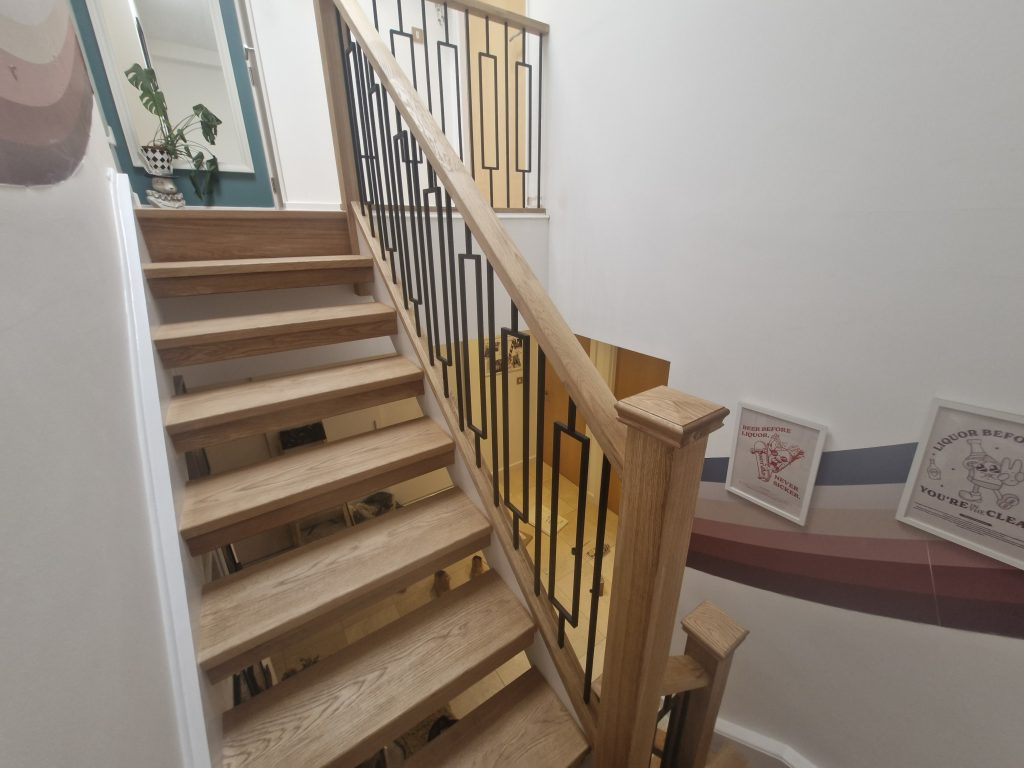
Once you’ve decided on oak handrails and newels, one of the biggest design decisions is what to use between them.
Oak or painted timber spindles
Timber spindles create the more traditional appearance.
They can be matched to the oak handrail and newels for a predominantly natural timber staircase, or painted to contrast with the oak.
Simple square spindles tend to create a cleaner contemporary appearance, while turned profiles suit more traditional interiors.
Timber is also relatively easy to alter or replace in the future.
Metal spindles
Metal balusters have become increasingly popular when homeowners want to modernise an existing staircase without moving to a full glass balustrade.
Black metal works particularly well against natural oak.
The combination gives you the warmth of timber without making the staircase feel overly traditional.
There are numerous designs available, ranging from very simple straight black bars through to decorative or twisted profiles.
For many homes, we’d favour a simple black metal spindle with oak handrails and newels. It’s a clean design that is less likely to date than heavily decorative alternatives.
Do the existing newel posts need removing?
Not necessarily.
This is one of the areas where staircase refurbishment requires a little more thought than simply purchasing new components.
Existing newel posts form part of the staircase structure, so completely removing them isn’t always desirable or necessary.
Depending on the staircase, the existing posts can often be cut down and adapted to accept new oak newel sections.
The new components need to be properly jointed and securely fixed because the newel posts and handrail form an important part of the balustrade.
Every staircase is slightly different, so this is normally assessed before deciding exactly how the refurbishment will be carried out.
What work is involved?
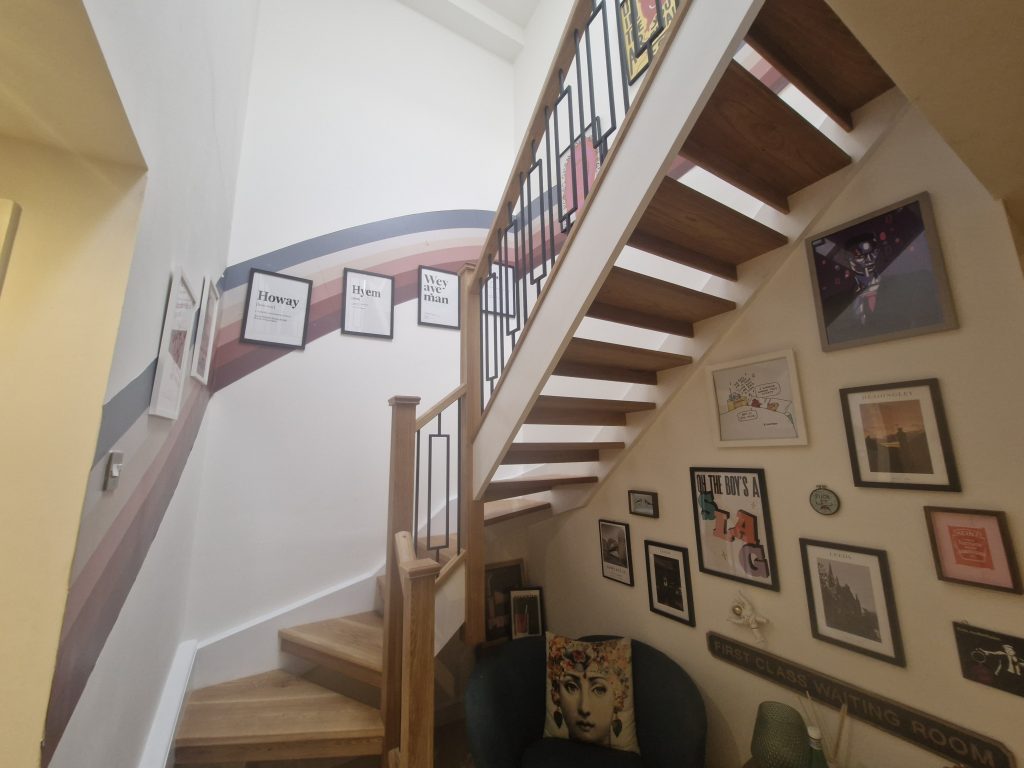
A typical staircase refurbishment starts with carefully removing the existing handrail, baserail and spindles while protecting the parts of the staircase that are staying.
Existing newel posts are then assessed and prepared for the new design.
Depending on the specification, the work can involve:
- Removing the existing balustrade.
- Cutting and preparing existing newel posts.
- Installing new oak newel sections or posts.
- Fitting new oak handrails and baserails.
- Setting out the new spindle spacing.
- Cutting and installing timber or metal spindles.
- Completing joints, plugs and finishing details.
- Sanding and preparing the oak for its final finish.
Accurate setting out is particularly important.
Spindle positions need to look balanced across the staircase while also ensuring the balustrade complies with the applicable requirements for guarding and openings.
How much does an oak staircase refurbishment cost?
There isn’t a useful single price because staircase layouts vary considerably.
A straightforward single-flight staircase is very different from a staircase with a return landing, several newel posts and metres of additional landing balustrade.
The specification also has a significant effect on price.
As a rough guide, a professional refurbishment using oak handrails and newel components would commonly run into the low thousands rather than hundreds of pounds once quality materials and installation are included.
For a relatively straightforward staircase, a sensible budgeting range might be approximately £1,900–£3,000+, with larger or more complicated staircases potentially costing considerably more.
The main factors affecting the final price include:
Amount of balustrade – More handrail, landing balustrade and additional flights mean more material and labour.
Number of newel posts – Newels are substantial components and often require considerably more work than simply fitting a spindle.
Spindle choice – Standard timber spindles, premium oak profiles and decorative metal balusters all have different material costs.
Existing staircase condition – A staircase requiring repairs or significant alterations before the new components can be installed will naturally require more labour.
Finishing – Whether the oak is supplied unfinished, oiled or lacquered will also affect the overall specification.
For an accurate quotation, the staircase needs to be measured and the existing construction assessed.
Oak doesn’t have to mean an entirely oak staircase
This is worth emphasising because it’s a common misconception.
You don’t need to clad every tread, riser and string in oak to introduce oak into a staircase.
In many properties, using oak specifically for the handrail, newels and baserail provides enough natural timber to make the staircase feel substantially more premium.
The remaining staircase can then be painted.
For example:
Natural oak handrail + oak newels + black metal spindles + white painted staircase
is a very different look from an entirely painted softwood staircase, despite retaining most of the original structure.
It can also be substantially less invasive than replacing the staircase.
What finish should be used on the oak?
Leaving oak completely untreated isn’t generally advisable on a handrail because it is constantly being touched.
A suitable clear oil or hard-wearing clear finish protects the timber while allowing the grain and natural colour to remain visible.
The exact product can also subtly change the appearance of the oak, from a very natural unfinished look to a slightly warmer tone.
We normally recommend deciding on the finish using an actual sample rather than choosing purely from photographs.
How long does the work take?
For a straightforward staircase refurbishment, installation will typically take a few days, although the exact programme depends heavily on the staircase and the amount of balustrade being replaced.
More complicated staircases, large landing areas or additional repair and finishing work will increase this.
One advantage compared with complete staircase replacement is that much of the existing staircase remains in position.
That generally means less structural disruption to the surrounding floors, walls and finishes.
Is refurbishment worth it?
If the staircase itself is structurally sound, absolutely replacing the whole staircase isn’t always the best use of the budget.
The handrail, newels and spindles have an enormous influence on how a staircase looks.
If the existing staircase needs more extensive work, a complete bespoke staircase may be a better option than refurbishment.
Changing these components can take a staircase that feels dated and turn it into a feature of the hallway without rebuilding everything underneath it.
Oak is particularly well suited to this because it works across different interior styles and, unlike short-lived decorative trends, has been used in quality joinery for generations.
That is what makes an oak handrail and newel refurbishment such a good option when the aim is a timeless rather than fashionable finish.
Staircase Refurbishment in Leeds & West Yorkshire
At Leeds Signature Joinery, we carry out staircase and balustrade refurbishment alongside complete bespoke staircase installations in Leeds.
We can assess an existing staircase, discuss different combinations of oak handrails, newel posts, timber spindles and metal balusters, and advise on the most appropriate way to upgrade the staircase while retaining suitable existing components.
If you’re considering updating your staircase, photographs and approximate dimensions are useful for an initial discussion, followed by a site visit where required.